Introduction
If you have ever traveled outside your country and tried to plug in your phone charger, laptop, or hair dryer, there is a good chance you faced a weird situation: the plug just… doesn’t fit. Or it fits loosely. Or worse, it sparks a little and you panic.
This is where a travel adapter comes in. Many people confuse it with a converter or think it is just “some plug thingy,” but it is actually an important small device that can save your electronics and your trip.
In this article, we will break down everything about travel adapters in simple language, with real-life examples, a bit of technical explanation, and yes—some small human-like mistakes too (because nobody talks perfectly in real life anyway).
What is a Travel Adapter?
A travel adapter is a small device that allows you to plug your electronic devices into electrical sockets in different countries.
Different countries use different plug shapes and socket designs. For example:
- India uses Type C, D, and M plugs
- UK uses Type G plugs (three rectangular pins)
- USA uses Type A and B plugs
- Europe mostly uses Type C and F plugs
So if you go from India to the UK, your charger plug physically won’t fit into the socket. A travel adapter fixes this problem by changing the shape compatibility, not the electricity itself.
Simple definition:
A travel adapter is a connector that makes your plug fit into foreign sockets.
That’s it. Nothing more fancy… well, mostly.
What a Travel Adapter is NOT
This is where many travelers make mistakes (I also once thought they are same thing, honestly).
A travel adapter is NOT:
1. A voltage converter
It does NOT change electricity voltage.
2. A transformer
It does NOT safely convert 220V to 110V or vice versa.
3. A charger
It does NOT charge your device by itself.
So if you plug a 110V hair dryer into a 220V country with just an adapter… boom, it may get damaged. Not always dramatic explosion, but it can burn the device slowly or instantly.
How Does a Travel Adapter Work?
A travel adapter is basically a mechanical bridge between two different plug systems.
Inside, it has:
- Metal connectors that match your plug pins
- Metal contacts that fit into foreign sockets
- Plastic casing for safety and insulation
It does not “transform” electricity. It just allows physical connection.
Think of it like this:
If your plug is a key, and foreign socket is a lock, then the travel adapter is like a key converter that reshapes your key so it fits the lock.
Not perfect analogy but you get it.
Why Do Different Countries Have Different Plug Types?
This is actually a historical thing, not random chaos (though it feels like it).
Countries developed their own electrical systems in early 20th century. Once they picked a plug design, they stuck with it.
Reasons include:
- Safety standards
- Manufacturing decisions
- Government regulations
- No global standard at the time
So now we have more than 15 plug types worldwide. Bit messy honestly.
Types of Travel Adapters
There are different types of travel adapters depending on your travel needs.
1. Universal Travel Adapter
This is the most popular one.
- Works in multiple countries
- Has sliding plug pins or interchangeable heads
- Supports USB ports in many models
Good for frequent travelers.
But sometimes they are bulky and a bit loose in some sockets.
2. Country-Specific Adapter
These are made for one region only.
Examples:
- India to UK adapter
- Europe to USA adapter
They are cheaper and more compact but limited in use.
3. Multi-Port USB Travel Adapter
Modern versions include:
- USB-A ports
- USB-C ports
- Sometimes fast charging support
You can charge phone, tablet, earbuds at same time.
Very useful, but sometimes heat up a bit (not always dangerous but noticeable).
4. Smart Travel Adapter
These are advanced ones with:
- Surge protection
- Auto voltage detection (sometimes)
- Smart chip for charging optimization
More expensive, but safer for expensive electronics.
Travel Adapter vs Voltage Converter
This is the MOST confusing part for travelers.
Let’s make it simple:
| Feature | Travel Adapter | Voltage Converter |
|---|---|---|
| Changes plug shape | Yes | No |
| Changes voltage | No | Yes |
| Used for phones | Yes | Sometimes |
| Used for hair dryers | No (unless dual voltage) | Yes |
Important note:
Most modern phone chargers are “dual voltage” (100–240V), so they don’t need a converter, only an adapter.
But devices like hair dryers, straighteners, or some kitchen tools may need a converter.
When Do You Need a Travel Adapter?
You need one when:
- You travel internationally
- Plug shape is different
- Your charger doesn’t fit socket
- You are staying in hotels or hostels abroad
Basically… almost every international trip.
Even business travelers always carry one.
Real-Life Example
Let’s say you are traveling from India to Japan.
In India:
- Plug type: C/D/M
- Voltage: 230V
In Japan:
- Plug type: A/B
- Voltage: 100V
Now your Indian charger plug won’t fit Japanese sockets. So you use a travel adapter.
BUT your phone charger likely supports 100–240V, so no voltage converter needed.
Simple, right? But many people still get confused and damage devices.
Common Mistakes People Make
Here are some very real mistakes (maybe you also did one of these):
1. Thinking adapter changes voltage
Nope. Big misunderstanding.
2. Plugging high-power appliances directly
Hair dryers can die instantly.
3. Buying cheap unbranded adapters
They may overheat or become loose.
4. Using one adapter for all devices without checking wattage
Some adapters can’t handle high load.
5. Not checking socket type before travel
Then you arrive and realize “oh no… nothing fits.”
Safety Tips for Using Travel Adapters
Even though they are simple devices, safety matters.
✔ Use certified adapters
Look for safety marks and trusted brands.
✔ Avoid overloading
Don’t plug multiple high-power devices into one adapter.
✔ Check device voltage
Look at your charger label: “Input 100–240V”
✔ Don’t force plugs
If it doesn’t fit easily, something is wrong.
✔ Unplug when not in use
Basic safety habit.
Do All Countries Need Travel Adapters?
No.
Some countries share similar plug types, like:
- Most of Europe (Type C/F)
- Parts of Asia
- Some African countries
But even then, slight differences exist.
So travelers usually carry a universal adapter anyway.
Better safe than sorry.
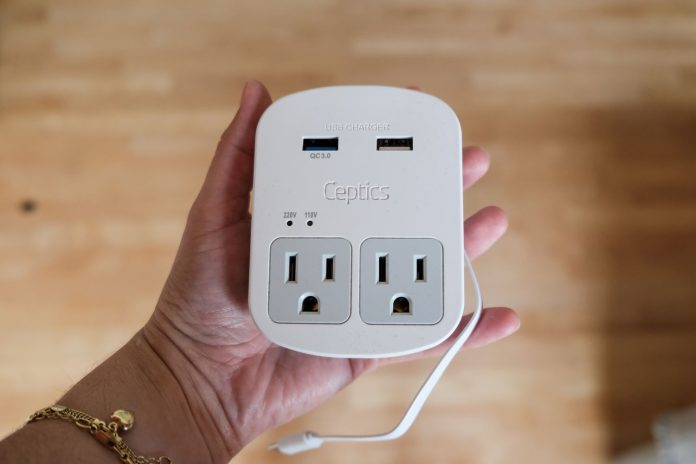
Modern Travel Adapters with USB Ports
Today’s travel adapters are not just plug converters anymore.
They often include:
- USB charging ports
- Fast charging (Quick Charge, PD support)
- Multiple device charging
- Compact folding design
Some even have built-in cables.
Honestly, they feel more like mini charging hubs than simple adapters.
Are Travel Adapters Safe?
Yes, if used properly.
But unsafe if:
- Cheap quality
- Overloaded
- Used with incompatible voltage devices
A good adapter is usually very safe. It’s electricity, not magic—but still needs respect.
How to Choose the Right Travel Adapter
Here are some practical tips:
1. Check destination countries
If you travel to multiple countries, buy universal.
2. Check device types
Phones vs hair dryers vs laptops.
3. Look for USB-C support
Very useful in modern travel.
4. Portability
Small and lightweight is better.
5. Build quality
Don’t buy extremely cheap ones (they break fast, trust me).
Future of Travel Adapters
Maybe in future, travel adapters won’t even exist.
Why?
Because:
- USB-C is becoming global standard
- Wireless charging is improving
- Universal sockets may become more common
But for now, adapters are still necessary travel companions.
Conclusion
A travel adapter is a small but essential device that allows your electronic devices to physically connect to foreign power sockets. It does not change voltage, it does not charge devices, and it is not a converter—it simply bridges the gap between different plug types used around the world.
If you travel internationally, carrying a good quality travel adapter is almost as important as carrying your passport. Without it, even the best phone or laptop becomes useless once the battery dies.
So next time you pack your bag, don’t forget that tiny plastic-and-metal lifesaver. It may look simple, but it quietly saves your trip from a lot of frustration.
And yeah… always double check plug types before you go. Many people forget that part and then regret it in hotel rooms at midnight.